Sunday, 2 February 2014

There is more...


Last night, as part of our Culture and Identity class, we had a field trip to Skid Row, where we met General Jeff, a community activist. Skid Row has one of the largest populations of homeless people in the USA.

I was deeply affected by meeting General Jeff. He is from South LA, and moved to Skid Row about 7 years ago to work in the community and be a voice for the community. He worked in the music industry as a successful rap artist before deciding to move to Skid Row, and give his life to the community and people there. He has now become a pillar of strength and voice for the community, saying things that few others dare to say, and being a positive influence to the extent that few dare to or even think of trying.

My initial feelings and thoughts when starting on the tour - was irritation, questioning why we were doing this - a few students taking a tour as spectators to this community which holds people with very real problems, and very real pain. However, after spending our time with General Jeff - I knew that I had missed the point earlier. The point is that although this community is filled with crime, homelessness and more - there are many positive things going on in the community, and many people working to effect change in the lives of the residents of Skid Row. 

Homelessness has a face, and has a name. Poverty has a face, and a name. Each person who lives at Skid Row, whether homeless, mentally-ill or struggling with addiction, has a face, and has a name. This is true for people and children around the world who live in poverty. At what point do we stop walking past the people around us who need us, at what point do we look past the stigma of homeless and poverty, that the person we see is a person we see is a person with real needs, real life experiences and real pain. When do we stop and engage - not helper to homeless, but person to person, not superficially, not just a 'hi' or 'God bless you', but a genuine seeking to know and understand. These are questions I am posing at myself - questions I know I need to work out in order to do this work in a way that truly empowers rather than causing harm to communities.

I need to learn how to approach this work through thought-processes and dialogues that engage issues at both a macro and very micro level. 

I am learning that things are not always as they appear to be, and as people portray them to be. Just as General Jeff emphasized yesterday, "There are two sides to every story". We need to be willing to listen to the communities we are working in, otherwise it is so easy to miss the point, and more importantly, miss the people.

The last two years have been full of seeing, and thinking, and being inspired by the great work that people and organizations are doing here, and around the world. But yesterday, it was the closest experience and encounter with the kind of work I feel myself being drawn to more. I do not know what shape this will all eventually take...I just know that in terms of my life's work, that there is more, and a deeper work that needs to be done. That my current frame with regard to social transformation and youth development is way too limited. I know there is more...

Tuesday, 21 January 2014

Dream For the Future


Allow me to dream for a moment...with no boundaries, no criticism...just to dream. If you could dream of a future for your nation, what would it look like?

Every family has a home.
Every child has food.
Every child is love and cared for. Every child is safe.
Every child goes to school and has access to the best education.
Every child has hope, and has value placed on their lives through loving relationships with the people in their lives. Every child has the opportunities and support they need to become who they were meant to be and fulfill their life's purpose.

Communities come together and strive to bring about change - uniting for change on the premise: Every child is our child.

A nation who shares, because they understand that its in giving that you receive. A nation that works together for the common goals of firstly our children being taken care, then our communities' needs being met. A nation that works to take care of the homeless, the old, the young person without hope for their future. A nation that is not scared to stand up, and get our hands 'dirty' by stepping out of what makes us comfortable, and meeting the need of someone we encounter, or taking the time to have that conversation with someone who needs it - to learn or be encouraged.

If we can raise a strong generation - a generation that is culturally aware and does not hold prejudice, a generation that has hope...then we can construct a future.

The things you teach a child from young, rarely departs from them - teach a child to hope, and to love. Teach a child to dream. Teach children the importance of working together and being part of a bigger picture- that we are stronger standing together than scattered and just taking care of 'me and mine'. Teach a child to share. Teach a child that she/he is valuable.

This goes beyond just music or social organizations- this speaks to people. This speaks about a movement of change, a re-awakening that realizes that our children ARE the future. This speaks to organizations, businesses, education, government, and most importantly ordinary people- this speaks to every sphere of our nation. A nation that realizes the significance of standing together, supporting eachother - because after all it's not about us - it's about paving the way for the next generation, for our children, and children's children. 

This battle is not just our governments', our community leaders', our schools' or even our churches'/religious groups': this is a personal fight for all of us. When you lean in to help with social transformation and development in your community, and therefore your country - you contribute to the future of your own children and family.

Every child is OUR child.

"Build as if you are building for your own children..." Erik Holmgren, a leader I respect and who inspires me, made this profound comment once when I was in the Sistema Fellowship at NEC. I will never forget this sentiment, because it is so true, and so necessary. 

"Because the people who are crazy enough to think that they can change the world, are the ones who do". - Steve Jobs


Tuesday, 7 January 2014

Sunshine and greetings from LA...


Greetings from LA...

I trust that you are well and that you enjoyed your festive season. I hope that your year ahead is a meaningful one, and that the dreams in your heart for this year come to fruition.


I am excited about the year ahead - It's going to be a good year. It has been great to spend the last 6 months in Los Angeles. When people said that there is no winter here, I thought they were exaggerating, but they were right (to my big surprise!). So, during this festive season, I have been exploring different parts of LA, such as Venice Beach, downtown LA, Griffith Park and Observatory, and LA museums. I have also spent my time writing a mini concerto for flute and orchestra called "Remember, South Africa", which is about remembering our freedom, and will be played as part of my final music project.


“In learning you will teach, and in teaching you will learn.” Phil Collins

This quote summarizes my experiences of the last few months as part of the Masters of Arts in Teaching Program. The highlight, for me, is being immersed everyday in the YOLA (Youth Orchestra of Los Angeles) at HOLA El Sistema program, which has an incredible family-like culture of positivity, love and excellence. Every MAT student is both a mentor and a mentee, creating a unique cycle. In the picture above, I am playing alongside YOLA students in the wind band concert at the Disney Hall Amphitheatre.


Another highlight has been watching the Los Angeles Philharmonic rehearsals and concerts. We have observed conductors such as Gustavo Dudamel, Bramwell Tovey, Itzhak Perlman and Esa-Pekka Salonen. This interesting juxtaposition of being submerged in an El Sistema program, and being exposed to the work of the Los Angeles Philharmonic, and how the partnership between these entities functions has been both fascinating and inspiring. 


In this coming term, I will be coaching a woodwind chamber group, organizing team building activities for students at YOLA, helping to mentor a student leadership group and to prepare students for their side-by-side concert with the Simon Bolivar orchestra from El Sistema, Venezuela. At this concert, they will be playing Tchaikovsky repertoire together with the Simon Bolivar orchestra. I will also begin to do research around the positive impact of music on children's growth and lives, as well as what combining youth development and the arts looks like.
These pictures were taken when some of my MAT colleagues and I played alongside YOLA students at various concerts and events. Our time with YOLA students are always fun and inspiring.

I would love to hear about how you are doing, and any thoughts on the topics I am researching are most welcome.

Warm Regards,

Monique

Thursday, 7 March 2013

Decide


Just as my life has been full of many opportunities, my life has also been full of many decisions. My experiences have often stemmed from a string of minor and major decisions, each having a consequence, good or bad. Although every decision seems separate, they are all linked in the myriad of our make-up as people. 

It's like the ripple-effect: if you drop a stone in water, you will see little ripples of water move outward. So are our lives.  I have heard the saying, "No man is an island". The decisions we make influence (knowing or unknowingly, intentionally or unintentionally) the lives of those around us. Imagine we intentionally used this ripple effect for transformation in our communities.

Yes, there are very dear people in all of our lives, that spent their lives making sure we could live ours. For me, this is my parents and family. I am immensely grateful, especially to my mother and father, for every sacrifice they have made for me. I often think about children who do not have this solid foundation to build on, in terms of their parents being there for them. In retrospect, I realize that I make the decisions I do today because of the influence of my parents: they have taught me how to navigate life and its many twists and turns.

Our decisions are based upon how important people in our lives have influenced us. They are also based on how we see ourselves, and how we see ourselves in relation to those around us. 

So, in life, we come across the "rotten" fruits of our poor decisions. We see a tree of bad attitudes, destructive behavior and actions. We see a bark of circumstances and even background. But we seldom look for and closely examine the root. I often think the root of most poor decisions is a tainted view of oneself. It's like looking at yourself in a cracked mirror. Granted, in sticking with the tree analogy, this is often due to absent gardeners, lack of sunshine, being fed the wrong plant food, or not having enough water. Despite all of the many reasons, the decision is still ours to make, as to who we want to be.

We decide daily: to act, to react, to respond, to laugh, to speak, to remain silent, to play, to engage, to take action, to eat, to sleep, to feel, to love...to live. No matter what circumstances we are surrounded by, we decide who we want to be. This speaks about our character, our work ethic, the way we treat people and why we do things (motives).

I think that true transformation comes from within - and is often linked to a decision. The truth is that we do not have control over the decisions others make. However, we can help young people see their potential, by giving them a "new mirror" to see through. We might actually have the privilege of helping the roots in some of these young lives to grow well, and healthily, so that this has a ripple effect into the rest of their lives. 

Why This Matters: Stories of Hope


It was a sweltering day in the vibrant city of Barquisimeto today. As I sat on my bed this afternoon, looking out my bedroom window, I began to reflect on the many individual stories we have encountered in the past 3 days alone. 

One that stood out to me, occurred on Monday afternoon. Elise Seymour, a fellow fellow and I, while waiting entered into a conversation with a couple who were also waiting. We were standing outside a room, that was bursting with percussion sounds of claves and different drum beats. It was a percussion ensemble for people with special needs. 

The couple we met started telling us about their son, who is 36 years old and has down syndrome. The proud mother pointed to her son through the window, and told us that he had been coming to the nucleo in Barquisimeto for 11 years. He attends the nucleo 3 times a week. Before attending the nucleo, he could not speak. Initially he was placed in choir, and then later was moved to this percussion ensemble, which he has been in for a few years. He is now able to speak, because of his time in choir, and his interaction with peers throughout this process. To me, this was profound. Being part of this nucleo family has literally changed his life. 
 
Yesterday, we visited a nucleo just outside barquisimeto called Tamaca. This humble-looking nucleo, has a big, vibrant and industrious spirit! We were welcomed by a vocal ensemble, and taken around to see many of the classes. One of the last classes we saw was a vocal ensemble containing women. We asked if we could sit in, and learn a song. When chatting later to the women in the ensemble, we discovered that they were parents of children at the nucleo. This choir was started for parents who come and wait for their children, as well as to help the parents develop musical skills so that they can help their children with their homework. This moved me.

One of the parents in particular, takes a bus from Barquisimeto 5 days a week to be at the Tamaca nucleo, since Barquisimeto has a waiting list, and is for children who already know how to play music to some extent. Her daughter is learning how to play the viola, and they will continue to travel to Tamaca for tuition till they are able to get her in at the Barquisimeto nucleo at the Conservatory. We gave her and her daughter a lift back to the city, and she began to speak about what the nucleo means to her. She said that besides keeping young people from things like drugs and prostitution, music is now what the community speaks about, instead of speaking about crime. This was a golden statement for me.


The work that is being done here in Venezuela by El Sistema is astounding, and it is easy to be completely overwhelmed when considering the fact that they currently serve 400 000 children throughout Venezuela. I realized this evening, that each one of these children and young people have their individual stories. They are receiving the beautiful gift of learning music, and as music and the nucleo family become an integral part of their lives, their stories are being transformed. Many of these stories now contain hard work, the pursuit of musical excellence and taking ownership of their own learning and the learning of others (peer to peer teaching/mentoring). 


The Director of the Tamaca nucleo, spoke about their sentiment behind learning music. He said they teach that every problem has a doorway and there is no such word as "I can't". There is a solution to every problem. This is as true for life, as it is for music. The pages in the very personal, yet unified stories of these young lives are filled with accomplishments and success everyday. It is in the daily mini-successes that come by overcoming musical 'problems', through hard work and practise, that change a life one accomplishment at a time. The nucleos and teachers are not just influencing the stories of these young lives, but they are an integral part of their stories. Since our stories are intricately linked with those around us, the nucleo becomes part of the community's story. More than this, the nucleo in essence, helps in beginning to write a new story for each child, and therefore for the community: A story of passion, success and hope.

Tuesday, 5 March 2013

Changing a world: Opportunity and Possibility


 Being in Venezuela has been both exhilarating and poignant thus far. My world has been changed everyday by what I see, hear and am experiencing. A fellow fellow, Xochitl Tafoya made this statement on Sunday morning as we were about to leave Caracas, "There are no limits". We were chatting about the different types of programs that Sistema has: orchestral, choir, folk, jazz, instrument-making and repair workshops, programs that cater for special meeds, and soon to be a string quartet program. Today, when visiting a nucleo just outside Barquisimeto, the Director, in an inspiring conversation, reiterated Xochitl's sentiment.


A few nights ago, I was thinking about dreams, and whether it was important to have this big dream for our lives individually. Why is it necessary to dream? What does success truly look like? Why does all of this matter so much to me, and to everyone else here?
Just as it is with great artwork, an artist might paint a masterpiece with an idea in mind, and then name the artwork, and display it in a gallery. When viewers examine the artwork,  they may see something completely different to the artists original intention. It also may mean different things to different people. 

We had a  class at NEC with Judy Bose just before we left for Venezuela. The class was about aesthetic education. One of the group exercises involved using creative movement to express our emotion, and even tell a story. When gaining feedback from the other group, they derived so much meaning and even symbolism in our display. They even managed to extrapolate meaning that we had never even thought of or intended. This was a astounding learning point for me: The meaning derived from what is created,  often completely surpasses the artists' intent. This is true for many art forms. 

I believe that this is also true when working with children. If I take a good look at my life- it is made up of a string of opportunities that came at the right time, that propelled and continues to propel me into my future. When we give a child an opportunity, we are changing their world, because we are changing the possibilities for their lives. Just as my world is being changed everyday here, by this amazing opportunity, so we can change young people's worlds. The world is ever changing, yet remaining the same- especially in terms of the circumstances we grow up in. But I believe that if we can help to transform the frame or lens through which young people see the world around them, we open the window of possibility.

This is exciting and inspiring, but it also scares me to no end. Rodrigo Guererro said a number of times  last week, "This is serious business!" That sentence has been etched on my heart as I realize the immense responsibility that comes with working with children. We are all in a sense stewards of these young lives. As teachers, mentors and opportunity-givers, the honor is ours, to be able to give and share music and 'life' with others. It is also our responsibility to see potential, and then help children to see this potential in themselves.


This, to me speaks about changing paradigms through changing mind-sets, through simply providing opportunities. Opportunities to learn music, opportunities to experience different things and places, opportunities to dream. These opportunities change the possibilities. In essence, if life had a doorway to success, then us empowering young people to succeed by teaching them music is giving them a key, and showing them how to open the door and walk through it. We also enable them to dream about what is on the other side of the door. Children still need to take the key and open this door, by making use of the opportunities presented to them. There are many more doors after the first one, and its this process, that enables a young person to dream, and realize that they can actually live their dream. 

The thing is, we do not know the full possibilities of the opportunities we give others. I have heard the saying, "Reach for the stars, and you might land on a cloud". I have a feeling that in this kind of work, the sky is not even the limit. By providing an opportunity, we open the doorway of possibility, and inevitably a young persons world is changed.

Friday, 1 March 2013

Inspired


What an inspiring day!!

The nucleo we visited today, Serria, is based at a primary school. Today I saw passion and excellence from a young age - not just in the manner in which they play (which is amazing for their ages), but in their attitude towards music. The teachers were awesome and inspiring.

Inspiring and enthusiastic teachers = inspired and enthusiastic students.

Venezuela...A Life of service


It has been almost a week in Venezuela, and we have been welcomed amazingly everywhere we go. To be here is a blessing, and I am humbled daily by what I see, hear and experience. Everything here has been thought out so well. This speaks of the astounding leadership of Maestro Abreu. His vision is incredible, and meticulous. On Monday, we visited the Centre for Social Action, which is a state of the art music centre built by El Sistema. It was truly built with the musician in mind...built with vision and purpose.

I see PURPOSE in every strand and cell of El Sistema. Nothing is done for no reason. And nothing is done selfishly. This is a lesson I never want to forget: Living selflessly. I have seen this many times in the past week. I think it is so easy to come in with our preconceptions, our tainted lenses and ideas of what this should be or what it is. Eduardo Mendez, the Executive Director, spoke to us today about not defining El Sistema, and that they never see themselves as the owners of this 'truth'. We should not limit the possibilities that this holds by trying to define it. This meeting was inspiring and insightful.

I do not want have this rare and precious opportunity to be here, and still miss the point. I see love, humility, hope and purpose as the yarn that is used to weave this exquisite tapestry, connecting people through music. There is a way of giving here that surpasses yourself, and even the person you are giving to or teaching. There is an attitude of such sharing here, with the understanding that we are all learning to share. You receive so that you can give, and you give because you have received. A culture of giving.


On Tuesday, we visited the Moltaban Nucleo. We saw children fully engaged while being taught, right up to the child n the last row who did not have an instrument. We saw a class of 4 years play xylophone, while beginning to learn music theory. We saw young people, sometimes not yet in High School learning Beethovens' 5th Symphony. They are grappling with and soaking in this repertoire from a young age. We also heard some vibrant Venezuelan folk music, that made me want to get up and dance!! This was played on cuatro, Venezuelan harp, maracas and double bass. I have never seen the maracas being played like that before... I am falling in love with this music!

Yesterday, we went to two instrument workshops, where instruments are not only repaired, but made. The focus of both workshops are two-fold: To take care of El Sistema's instruments, but then in the process of doing this, to teach others how to do the same. At the first workshop, the craftsmen who fix the instruments played some folk music for us on the instruments they were fixing, and had made. this time I did get up and dance!:-) The second workshop we visited teaches people with disabilities to make and fix string bows. they too will eventually work in their own community by being employed by their local nucleo. The experience at both workshops truly moved me, because they were the epitome of a self-sustaining cycle. Building to last. Although, to build a high building, you need a deep foundation. Its this foundation that I am so interested and fascinated in.

                        
In the last week, the question "Why am I here?" has been running through my mind constantly. What does being here mean for me? For my life? For South Africa, my home country? What is truly significant about all of this? This time here is going to be a crucial and defining moment for me, a pivotal turning point and course alignment. Everyday this week, while experiencing and seeing what is being done here, I have had this ball of excitement and wonder that grabs me at my core. This is not just because of what I see and hear, but because of what being part of this family means to people. I find this hope growing in me, because I am beginning to see and understand what this could mean to and for people in my own country and city. This is cultural and social transformation in action.

                                  
There is something special about the hearts of the people we have met here. Rodrigo Guerrero, the Assistant Director of Cultural Affairs, who is one of the most articulate people I have ever met, said something profound on Tuesday. The conversation was about public speaking. He said (I am paraphrasing) that when you think you have something really great to say, then you need to wait a moment, before you say it. Often, if you examine what you wanted to say, you would find that you were saying it for yourself. By taking that extra moment to reflect, you are shifting the focus off of yourself, and you can then speak with the right intent. This changed my world! These few sentences also spoke volumes about his heart. This is just one example of one person who has grown in and is part of the El Sistema family. There are many others.

So, to answer the question I kept posing to myself: Why am I here? I am here because I am supposed to be here. I am here because this is about more than my desire to be here, soak everything in and learn. It is about purpose. However, while asking myself this question, I realized that I was looking inward, and missing the point. This is not about my life, my dreams or my goals. In fact, it is not about me all. Its about being will to use your life to serve others.


Saturday, 9 February 2013

Strength to lean


The past few months have been valuable for me. I have been in a constant state of learning, and expanding my lens through which I see the world and people around me. In many of the sessions, discussions or even moments or words that I later ponder on, I realize that these life lessons that I am learning are going to reach into my future in ways that I cannot predict or fathom right now.

A few years ago, when I would worry about things, a good friend of mine would encourage me to be 100% present in every moment. I have never forgotten that gem of advice. In the fellowship, I have had many instances when I am stopped dead in my tracks by a moment of thankfulness to be here, and be around amazing people everyday. It is like I manage to get off the relentless treadmill of life for a moment, and savor the wonder and blessing I am living in, which is so easy to become blind to each day.

Last week at the end of a group session, we had to stand in a tight circle, shoulder to shoulder and feel the sense of 'leaning in' to each other. The facilitators, Bruce and Bette, ended off the session by getting us to say "I am strong, when you are strong." They also described the group as a system that functions effectively together.  I started thinking about what all of this meant.

I realized that we can only survive if we lean into the people around us, and realize that as we are leaning, we are also holding each other up. We are entrusted with recognizing and holding the value that we all bring to the team. This value does not stem merely from our education, our backgrounds, our ideas or even our experience, but from the value we bring as people. Giving yourself permission to 'lean in' is hard, because it requires trust. This trust often comes by allowing yourself a certain amount of vulnerability, which contrary to popular belief, requires a great amount of strength.


As a group of ten strong leaders, I think it is sometimes hard to admit to ourselves that we need others, and even more so that we need each other. I am learning that this year is a sort of 'training ground' for my growth, but at the same time, it is not about me at all - it is not even about us. It is about the impact we want to have on the world and people around us. It is also about the lessons we learn during this process. If this is then true, then my next thoughts are: How do I empower those around me for success? How do I give those around me space to lead? How do I give others space to make mistakes? How do I do all of these for myself, especially in the light of the realization that it is not about me?

I am thankful to have these questions answered daily by those I am in contact with who embody authentic leadership and who have learnt how to allow others to develop and move towards success. These lessons I learn, not from what these people say or do, but from who they are.

Thus, we learn; we dream; we ask; we stumble; we fail; we move forward; we examine; we ponder; we speak; we listen; we laugh, but most importantly...we grow. As we grow in trust, in honesty and even in vulnerability, we grow in strength.


(Music Fest 2012, in Philadelphia in December - an awesome experience where I got to play with and teach amazing young musicians, alongside great fellows of past years: Alysia Lee, Avi Mehta, Jose' Luis Hernandez-Estrada as well as some of my current fellows, Andrea Landin and Sara Zanussi).

Saturday, 22 December 2012

Why am I doing this?

Hi everyone,

Hope you are having a lovely festive season. I thought I would give you an update on the rest of my first semester in Boston. The last three and a half months have been both exciting, and contemplative adventure.

I have learnt many invaluable lessons, and my learning has taken place in three ways: by the classes we have had, by experiencing programs and seminars/symposiums, as well as from the many conversations I have had with various people, including my fellow fellows. Some of our classes, which have been very informative are: strategic planning; philosophy; public speaking and presentations; the connection between music and cognitve skill development; research, assessment and evaluation; logic models; student-centred learning and professionalism. We have also visited many Sistema-inspired programs in Boston and along the East Coast.

In the last two weeks, I have been to a Symposium entitled "Breaking the Fourth Wall" in Philadelphia, which was divided into two tracks, leadership and teaching. I was part of the leadership track led by Beth Babcock (CEO of a charity called Crittenton Women's Union), and my role as a Sistema fellow was to record the many discussions that took place. Areas of focus were: starting programs, finances and funding, assessment and organizational structure. This conference was an insightful learning experience because the leadership really managed to create a culture of sharing candidly about experiences- both strengths and weaknesses, good and bad decisions, failures and triumphs. The people leading these sessions were Sistema inspired program founders: Dan Trahey (OrchKids), Stanford Thompson (Play On, Philly!) and Rey Ramirez (Soundscapes).

The final night of the symposium, we attended the Simon Bolivar Orchestra concert, which was conducted by Gustavo Dudamel (now also conductor of Los Angeles Philharmonic). This was the first time I saw this El Sistema orchestra in concert- it was an amazing experience. They play with such energy and with zest. There were some astoundingly beautiful musical moments that literally took my breath away. In the break, I also met Dr Jose Abreu, who is the founder of El Sistema, and who I admire very much. I was lucky to see the orchestra play at Carnegie Hall in New York a couple of days later- and because I was sitting further away (ok, last row on the balcony:-), I saw how they physically moved as an orchestra- with such passion, and this truly enthuses the music. In New York, we attended a dynamic and historical session, where Dr Abreu was on a panel together with Leon Botstein (Conductor and President of Bard College) and Gustavo Dudamel. Many profound statements were made!! I walked away overwhelmingly inspired. Then finally, we helped out at a seminario hosted by Carnegie Hall and St Luke's Orchestra which brought together children from five Sistema programs in New York to play in a massive orchestra. Members of the Bolivar Orchestra came to coach the children. It was amazing to see young men, who play in a professional orchestra teach with such energy, love for the children and music, as well as a complete belief in the children's ability to play well, and that learning music is a life changing experience! Wow!!!

In the last two weeks of my residency, I visited OrchKids in Baltimore, and had a great time getting to know the staff and leadership team. One of the things I learnt from watching Dan Trahey in action is the importance of gaining the balance between really knowing the children in your program, knowing the community and their families, with being able to advocate for your program in a way that is understandable and meaningful to anyone and everyone. I then went to Philadelphia and had a awesome time visiting the Play On, Philly! Program. From Stanford Thompson, I learnt the value of having a well thought out plan and vision for your program, as well as the importance of having good teachers. I then proceeded to Washington DC where I met with a lobbyist from the League of American Orchestras and had an interesting discussion about how reforming and causing change in legislature regarding arts education is approached in the USA.

Before embarking on my residency, I met with a social entrepreneur, Hubby Jones, who has for over fifty years built many non-profit organizations that deal with challenging social issues such as racial tension. One of these organizations that really fascinate me is City Year where young people dedicate a year of their lives to playing a hands-on supportive role in underserved public school classrooms to help children with Maths and Language Literacy. This is what we desperately need in South Africa- it was great to find out that there is a branch in Johannesburg. Another organization that he founded is Boston Children's Chorus, a choir that focuses on racial integration. Mr Jones was the dean of social work at Boston University for 16 years. At our lunch meeting, I boldly asked him if I could shadow him when time permits, and he said yes! I am really hoping that he becomes one of my mentors as I embark on doing similar work in South Africa.

Recently, in a conversation with one of my fellow fellows, Andrea Landin, where we were throwing around ideas in preparation for speeches we had to present at a donor reception, she said something profound. We were speaking about why we are doing this work - and she really shed light on this question for me. She said that the question can be viewed in 3 ways:

Why am I doing this?
Why am I doing this?
Why am I doing this?

It is a good question. One that I have asked myself countless times. I am just beginning to answer these pressing questions for myself  as I dig deep into my own thoughts, journeys and life. As I glean from the robust field that already exists in this work, and from the many conversations and learning experiences I have had, I am realizing that the parts of this question that speak about using music as the vehicle to tackle some of our major pressing issues such as poverty, race and gender inequality, youth violence, school drop-out rates, gangsterism and even literacy levels has an ever-evolving and still developing answer. However, I do not think that this is an entirely new concept.

As to why I am wanting to do this, especially when I have spent practically 6 years studying how to become a Jazz and Classical Flute performer? My answer is two-fold: There is a great need in South Africa for something like this- not just necessarily through music- but starting to effectively address our social issues is an urgent matter. I believe that the answer lies in the education of the next generation- raising a generation of children who have a good self-esteem, are socially aware, and active in their communities. I saw this quote today, "It is easier to build strong children, than repair broken men (and women)", by Frederick Douglas. I agree.

The second part to my answer is simply this - I was born to do this. I cannot explain this feeling, but I just know that this is the 'point' of my life. I am getting to a place where the need I see becomes greater than my fear of failure or even my longing to be a successful performer. This is a time where everything in my life (my experiences, passions, failures, successes and enquiries) has shaped me to
embark on this very exciting, but challenging journey.

My favorites quote: "And the day came when the risk to remain tight in a bud was more painful than the risk it took to blossom". (Anais Nin)

Thanks for reading and therefore sharing in my journey!


Tuesday, 30 October 2012

Creating a Culture


These past two weeks, spent in the "Big Apple" have been exciting and fun, but also informative and thought-provoking. The first week was a rollercoaster of meetings: from the League of American Orchestras, Carnegie Halls' Musical Connections professional development sit-in, a brainstorming think-tank with St Lukes orchestra management, to the awesome Corona Youth Music Project in Queens and finally drinks with the daughter of Leonard Bernstein: Jamie Bernstein. What a week!!

The second week was a fun whirlwind of visits to various programs in New York: Union City Music Project, Third Street Music School Settlement and the Washington Heights and Inwood (WHIN) Music Project.

I learnt a great deal about some of the amazing work these organizations are doing in communities, what goes into developing these programs, and the planning, strategizing and hard work it takes to start and maintain these programs. The leaders and staff of many of these organizations and programs are inspirational, unrelentingly hard working and passionate, as well as humbly and openly willing to share what they have learnt and their "not easy, but very worthwhile" journeys of success. I also learnt about classroom management, being able to transition well when teaching, and about the dynamics of the different kinds of relationships built and interaction within these programs. I learnt about the importance of being able to phrase what you say well and aptly. However, what stood out to me the most, and the phrase that rang like a resounding gong in my head the entire 2 weeks, was "creating a culture".

Grappling with this gigantic, yet subtle concept was an interesting process for me, because the 'culture' of an organization or program is not a tangible thing. You will not find it on the webpage, in biographies or necessarily in the written mission, vision or goals. Yes, it might be described to a certain extent or you might read a semblance of what the organization would like its culture to be, or would like you to think its culture is. But you will not know until you walk into their building, and meet and engage with the people who are part of the organization and who spend their time there. This might not even be enough, you might need to immerse yourself in their world to understand what it is all about. However, whether we like it or not, first impressions are lasting impressions - although, they can also be very subjective impressions.

What I learnt was that every organization had a different feel, a different atmosphere, different kinds of people...a different culture. I thought of this image: wine tasting. I am not at all an expert at wine-tasting or in this field of social change through music, but certain things are not as much about expertise, as they are about impressions, intuitive perception, engagement and being able to candidly draw the invisible lines between these through common sense.

So, wine tasting...there are 4 stages: the appearance (label, glass, colour etc); the aroma (in glass); sensations (in mouth) and aftertaste (finish). These elements are combined to establish different properties of the wine such as character, potential and possible faults. Wine, unlike most other beverages has hidden subleties, nuances and complexities.

The appearance (and price) tells you about what you could expect from the
wine. The power of suggestion is interesting, and the role it plays in our expectancies, as well as the assumptions we make, and conclusions we draw. This stage of wine tasting, I would correlate to what you read/research about organizations and the things you hear about organizations or people. Here, I learnt to not ‘judge a book by its cover’ or even by your expectations. We always need to dig deeper.


The aroma or ‘smell’ is closely linked to tasting the wine, and is your initial 
detections and exchange with the wine and its flavours and accents. This I would link to your initial interaction with people/person from the organization, before meeting them. This connection could be via phone, as a conversation or interchange of messages via e-mail. This is your pre-first impression, and could either present itself as an aroma or an odour, but until you taste it, you will not know for sure.

The third stage is sensations or tasting, and is when you will experience variations of sweetness, dryness, acidity or astringency. This, to me, is like your first actual meeting or experience with organizations, programs or people. There is something fascinating about this aspect of your impression - when a wine is abit off, not completely amazing, mediocre or not properly put together or confusing and difficult to place, you cannot always put your finger on why or what it is thats not quite right or doesn’t quite fit, or what the taste and accent at its core is. Its often too subtle. However, when a wine is good, from the inside out, at its core, a great blend and effective taste, well-crafted, thought-out with great care and genuine - you know it. And you don’t just know it - you feel it - beyond tasting or smelling it - you feel it in your heart, your soul and everything in you says, “Yes!”


We all have moments like these in our lives - when we meet a special person, or when we know we are in the right place, at the right time and doing what we were born to do. Sometimes its the moment that you realise that you are living a dream of yours, or a musical moment on stage that makes your heart explode and eyes shine with joy or a song that moves you to tears. It could be when you unexpectedly see beauty - beauty in places or people. Beauty in a child - in their smile, their joy or something spontaneously endearing that they do or say. Or sometimes its that moment when you are doing what you do everyday, and you realize that if given the choice, you would not be anywhere else in the world or do anything else- because what you are doing really matters - to you, and those around you.


This sensation and first experiential stage of your impression is just that - your first impression, your first sip. Most times you need to drink in and be soaked in the experience more to completely understand the subtle undertones, shades and intricacies. Even so, your initial impressions are valid and often led by the heart - and your heart often does say yes when it identifies greatness. Because when things are ‘good’ at their core and have the right intent - you know it, its undeniable. This goes for people as well - when you meet people who have their hearts in the ‘right’ place - you know it. This transcends what they say - because words can be deceiving - but you see this is what they do, and even more in how they do things and interact. And to me, this speaks about doing things for the right reasons, that you love/truly care about the people/children you do them for and that you realise that its not about you, your ego or building your ‘empire’ or reputation - but about living your life to help improve the lives of others.

Finally aftertaste is the overall impression and balance that lingers after tasting the wine. An indication of a good quality wine is a long, pleasing aftertaste. Its the same in life - there are people, places, things that make lasting and impactful impressions on our lives. These last in our memories and hearts because there was often something real, genuine and sincere about them.


My role is not to criticize, but it is to examine what I experience - to begin to analyze my expectations, my impressions, the things my hearts said “Yes!” to, and things that disappoint me. This process is important because only in doing this can I begin to build an image in my mind of what I would like to help build - and how I would like to ‘make a difference’ - a real difference, not just the appearance of a difference. By doing this - honestly and candidly - I also hold a mirror up to myself, and face, as well as grapple with, my own intentions, the impressions that I create, my ‘appearance’, the initial ‘smell’ I give, the ‘taste’ or experience I allow and the aftertaste I leave.

The questions is: are we intentional about these things? When you love doing something - you know that you love it - its almost inherent. After this is established, are we intentional about the culture we are creating - whether that is within an organization, institution, program, a group of people or within yourself. This does not just speak about what we present to the world, but what we actually do when doors are closed, and no one is visiting. Or how we truly interact with those who are part of our everyday lives and work. Can we recognize when we are giving off an odour or bad aftertaste? Do we even care? Can we ask ourselves questions like: "Did I even use the right grapes?" or "Are we planting the right seeds?" And are we teachable enough and humble enough to be willing to begin the journey of change if our discovery warrants it. These are difficult questions - questions I pose not just to the world, but to myself as well.

If I truly want to be part of the process of changing the lives of others, I need to be willing to initiate change in my own life or ‘house’ - where it is needed.


About Me

My photo
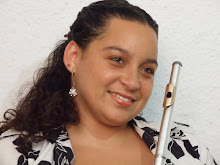
Monique Van Willingh is currently a Sistema Fellow at the New england conservatory of Music (Boston, USA). The programme studies the model of the Venzeulen programme, El Sistema, which uses music as a vehicle for social change. Monique graduated in 2009 with a Bachelor of Music degree in Jazz Performance (with Distinction in Flute), and in 2011 with a Classical Honours from the University of Cape Town. Monique is a resourceful flautist, who is proficient in both the Classical and Jazz genres of music. Monique was the 2010 winner of the Fine Music Radio and Pick n Pay Music Award in the Jazz Category and was also awarded the ImpACT Award for Young Professionals in Jazz Music by the Arts and Culture Trust (2010). She was recently chosen as a finalist in the SAMRO Music competition (jazz category) and received the SAMRO/Bonhams Award at the competition. Monique was a member of the National Youth Jazz Band (2010), and in 2009, she was selected as the Principal Flautist of the MIAGI Youth Orchestra, which toured Europe in 2012. Two passions central to her life are music and youth development.